
CDL Practice Tests for Class A, Class B, Class C
- There are hundreds of sites that provide CDL practice tests; some work and some do not.
- Remember, you get what you pay for. The CDL test isn't easy unless you're prepared.
- Choose a site that provides detailed explanations with the answers.
- Choose a site that provides a money-back guarantee to pass the CDL test the FIRST TIME.
CDL
Commercial Driver's License

Class A
CDL License
value package
Save over $25!
Regular Price $74.80
Bundle Price Only
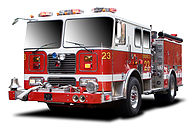
Class B
CDL License
value package
Save over $20!
Regular Price $59.85
Bundle Price Only
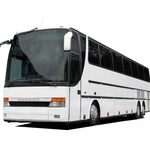
Class C
CDL License
value package
Save over $30!
Regular Price $79.80
Bundle Price Only
CDL Practice Test
At Test Questions & Answers, we offer a number of different
Enroll now to take advantage of these offers. The online registration process is quick and easy, and you'll be granted instant access to our practice tests. Regardless of which resource you choose, you can trust Test Questions & Answers to produce results.
How Our CDL Practice Tests Work
Our CDL practice tests contain questions on road rules, road signage, and CDL-specific concerns, such as trucking regulations. Each test consists of 20 random questions; each time that you log in or retake the test, you will be presented with a different set of questions so that you never take the same test twice. And with thousands of questions in our database, you likely won't see the same question twice either. Put simply, our practice tests are informative and helpful, and make terrific CDL study guides.
This is the Smart Way to Pass Your Exam!
The study process with our CDL practice tests is simple.
- Log in
- Complete a practice test
- Repeat. After you successfully pass three practice tests, you are ready to get your CDL license.
Studying for your CDL test or endorsement exam is that simple! We have such confidence in our study guides that we guarantee results. If for any reason you fail your exam after studying with our CDL practice test, we will refund your money, no questions asked. You have nothing to lose; try a sample practice test below!
FREE
Commercial License DMV Test Sample Questions
Here at the Test Questions and Answers, we are proud to present our Class A DMV test sample questions. These sample questions are presented to you similar to how they appear on the actual exam. The great thing about these practice tests is that you have the ability to take them as frequently as possible. We can guarantee that by taking these tests as many times as possible, that you will be best prepared for the commercial driving exam!
Question1
Answer1
Buy NowAn example of a key suspension part is the __________
- a. hydraulic shock absorber.
- b. spindle.
- c. drag link.
- d. none of the above
Explanation: Examples of key suspension parts are: hydraulic shock absorber, leaf spring, vehicle frame, front axle hanger, bearing plates, auxiliary spring, torque rod, axle, main spring, and spring shackle.
Question2
Answer2
Buy NowThe maximum GVW specified by the manufacturer for a single vehicle plus its load is the __________
- a. Gross Combination Weight.
- b. Gross Combination Weight Rating.
- c. Gross Vehicle Weight.
- d. Gross Vehicle Weight Rating.
- a. Gross Combination Weight.
- b. Gross Combination Weight Rating.
- c. Gross Vehicle Weight.
- d. Gross Vehicle Weight Rating.
Explanation: You must understand basic cargo safety rules to get a CDL. If you load cargo wrong or do not secure it, it can be a danger to others and yourself. You are responsible for not being overloaded. Gross Vehicle Weight Rating is the maximum Gross Vehicle Weight specified by the manufacturer for a single vehicle plus its load.
Question3
Answer3
Buy NowYour vehicle's right turn signal should be __________ at the rear.
- a. yellow
- b. amber
- c. red
- d. any of the above
Explanation: Conduct a walk-around inspection of your vehicle during step five of the Seven-step Inspection Method. When you check the rear of the vehicle, check the lights and reflectors. Make sure the rear clearance and identification lights, reflectors, taillights, and right rear turn signal are clean, operating, and the proper color. Rear clearance and identification lights, reflectors, and taillights should be red at rear. The right rear turn signal should be red, yellow, or amber. Make sure that the license plate(s) are present, clean, and secured. Be sure the splash guards are present, undamaged, properly fastened, and not dragging on the ground or rubbing tires. Make sure the cargo is properly blocked, braced, tied or chained, that tailboards are up and properly secured, and that the end gates are free of damage and properly secured in the stake sockets. Secure the canvas or tarp to prevent tearing or billowing that might block the rearview mirrors or cover the rear lights. If over-length or under-width, make sure all signs and/or additional lights/flags are safely and properly mounted and that all required permits are in the driver's possession. Make sure the rear doors are securely closed and locked or latched.
Question4
Answer4
Buy NowWhen you conduct your walk-around inspection of the left front side of the vehicle using the Seven-step Vehicle Inspection Method, check __________
- a. that door latches or locks work properly.
- b. the condition of the front axle.
- c. the lights and reflectors.
- d. all of the above
- a. that door latches or locks work properly.
- b. the condition of the front axle.
- c. the lights and reflectors.
- d. all of the above
Explanation: Conduct a walk-around inspection of your vehicle during step five of the Seven-step Inspection Method. When you check the left front side of the vehicle, make sure the driver's door glass is clean. Make sure that door latches or locks work properly. On the left front wheel, check the wheel and rim for missing, bent, or broken studs, clamps, lugs, or any signs of misalignment. Check the tires to ensure that they are properly inflated, that the valve stem and cap are OK, and that there are no serious cuts, bulges, or tread wear. Use a wrench to test rust-streaked lug nuts for looseness. Make sure that the hub oil level is OK and that there are no leaks. Check the left front suspension next. Look at the condition of the spring, spring hangers, shackles, u-bolts, and shock absorber. On the left front brake, check the condition of the brake drum or disc and hoses.
Question5
Answer5
Buy NowIf something is blocking your path and you are blocked on both sides, __________
- a. steer right.
- b. brake hard and hold the wheel straight.
- c. brake lightly and hold the wheel straight.
- d. steer left.
- a. steer right.
- b. brake hard and hold the wheel straight.
- c. brake lightly and hold the wheel straight.
- d. steer left.
Explanation: Stopping is not always the safest thing to do in an emergency. When you don't have enough room to stop, you may have to steer away from what's ahead. Remember, you can almost always turn to miss an obstacle more quickly than you can stop. If an oncoming driver has drifted into your lane, a move to your right is best. If that driver realizes what has happened, the natural response will be to return to his or her own lane. If something is blocking your path, the best direction to steer will depend on the situation. If you have been using your mirrors, you'll know which lane is empty and can be safely used. If the shoulder is clear, going right may be best. No one is likely to be driving on the shoulder but someone may be passing you on the left. You will know if you have been using your mirrors. If you are blocked on both sides, a move to the right may be best. At least you won't force anyone into an opposing traffic lane and a possible head-on collision.
The Results Are In
Sorry You Didn't Pass
Don't Worry - It's OK!
- 95% of the people who complete our Fast and Easy Prep Course PASS the written DMV exam the FIRST TIME (Compared to 50% who FAIL).
- It's SO MUCH EASIER than spending hours and hours studying a boring CDL handbook!
- Complete our CDL Exam Prep Course and you'll PASS THE CDL the 1st TIME - GUARANTEED or your money back!
The Results Are In
You Did It!
Great job! But Wait!
There's still more to learn, though! Taking a sample test with five questions is one thing, taking an official commercial driver's license exam with a hundred questions or more is another. Did you know:
- 95% of the people who complete our Fast and Easy Prep Course PASS the written DMV exam the FIRST TIME (Compared to 50% who FAIL).
- It's SO MUCH EASIER than spending hours and hours studying a boring CDL handbook!
- Complete our CDL Exam Prep Course and you'll PASS THE CDL the 1st TIME - GUARANTEED or your money back!
The Results Are In
You Did It!
Outstanding job! But Wait!
There's still more to learn, though! Taking a sample test with five questions is one thing, taking an official commercial driver's license exam with a 100 questions or more is another. Did you know:
- 95% of the people who complete our Fast and Easy Prep Course PASS the written DMV exam the FIRST TIME (Compared to 50% who FAIL).
- It's SO MUCH EASIER than spending hours and hours studying a boring CDL handbook!
- Complete our CDL Exam Prep Course and you'll PASS THE CDL the 1st TIME - GUARANTEED or your money back!
DMV Exam Prep Course & Unlimited Practice Tests
Pass the test on the first time
no matter what state you live in!
And Save up to 50%
See what others are saying!






Due to your great site, I was able to pass my CDL test! I got six wrong out of 50! I have my Class C license in hand. I am going to go for other CDL endorsements. Thanks again for a wonderful CDL test preparation site and for helping me pass my test! C.S., Dallas, TX
Great school bus endorsement practice course. I passed the test with a perfect score the first time. Thank you so much. Edward P., Sewedsboro, NC
I cleared the Knowledge test and the driving test this Monday and received the driving license. The online tests offered by you were very useful. P.K., Houston, TX
Just wanted to say you are true professionals. I passed my written test on the first try. I previously paid money to a competitor who offered a course and test questions which were not helpful at all .I will certaintly recommend you to anyone seeking a CDL license Dale T., Craig, CO
I would like to thank you for your wonderful CDL practice test course. I passed the General Knowledge CDL test beautifully, with no problems. I.R., Gainesville, FL
I just wanted to tell you how pleased I am with your site. Your online CDL practice test questions are remarkable. To date, I've taken about nine practice exams and they are never quite the same. R.S., Lynchburg, VA
Just wanted to say thank you; as you promised, I passed my CDL tests including all endorsements on the first try. My examiner said, "Boy, somebody studied! I am very impressed." I took eight tests all at once and passed them all with flying colors! Very well done - thanks again! R.H., Thomaston, GA
Your design is a refreshing, real-world approach to understanding and retaining the information I need to pass the most difficult of the CDL endorsements, such as the Hazmat test. Previously, I used your site to pass my Airbrake test with flying colors and this time around is no exception. A great experience and a product I'd highly recommend. Thanks for the commitment to quality! T.C., Detroit, MI
Thanks! I used your online CDL practice tests for my Class B CDL and passed after studying for just three days. B.S., Fairview, OR
Free CDL Practice Tests
- Over 3,000 questions similar to those on the CDL test
- Try our FREE sample questions here
- Money-back guarantee you'll pass the 1st time
Individual CDL Prep Courses:
Our CDL Test Question and Answers Course is made up of over 3,000 questions similar to those found on the DMV Commercial Drivers License test.
Once you log in, you can view hundreds to test questions and answers, along with DETAILED EXPLANATIONS. When you pass our final exam, you'll know when you're ready to take the CDL exam or for any CDL endorsement at your local DMV Office.
- Know the Answers BEFORE you take the CDL Exam!
- Easily learn the answers to the CDL test questions, plus get detailed explanations.
- Unlimited CDL practice exams & includes our Money-Back Guarantee!
All applicants need to be familiar with CDL Driver's Manual. Think you know the material?
Take our CDL practice test now and test your driving knowledge.
Guaranteed to Pass CDL License Prep Course
Prepare for the CDL Exam online! Don't spend hours studying the Commercial Driver's Handbook when you can study online with our Guaranteed CDL Prep Course.
- It's like having the answers BEFORE you take the CDL exam!
- Easily learn the answers to CDL test questions, plus get detailed explanations.
- Money-back guarantee
When you have successfully taken and passed each test at least five times, we guarantee you'll pass your CDL test the FIRST time at your local driver's license office (or testing center) or we will provide you with a full refund for the cost of the course!
Sign up now for our online CDL practice test course. You'll pass the CDL Knowledge Tests the FIRST time... or we'll refund your money! Learn more about our CDL Value Package to make studying for your CDL license even easier!